CopperTide/Environments
Worlds built from your systems
An environment holds working copies of your systems, seed data and a clock. Each run starts from a fresh copy, and the engine saves each step with a state change.
CopperTide/Environments
An environment holds working copies of your systems, seed data and a clock. Each run starts from a fresh copy, and the engine saves each step with a state change.
Connectors
Each connector runs as a small separate program, and the engine sends the connector five kinds of request.
Write a connector in any language. Rust and Python kits handle the plumbing, and a checker tests each new connector before use.
| Call | What the connector does |
|---|---|
| start | Brings up a fresh instance of its system for one run |
| act | Executes a tool call and returns the result |
| save | Captures the system’s state at a step |
| restore | Puts a saved state back, exactly or by replay |
| compare | Reports the difference between two saved states |
What a world holds
Real software where a test allows, simulators elsewhere. Reports label each simulated system.
SQL and NoSQL stores, saved and restored per run.
Any service in a container, started fresh for each run.
ERP, CRM, EHR and ticketing systems, real or simulated.
Shared drives and document stores.
Sealed inside the world. Nothing leaves.
Customers, suppliers and counterparties replying on the world clock.
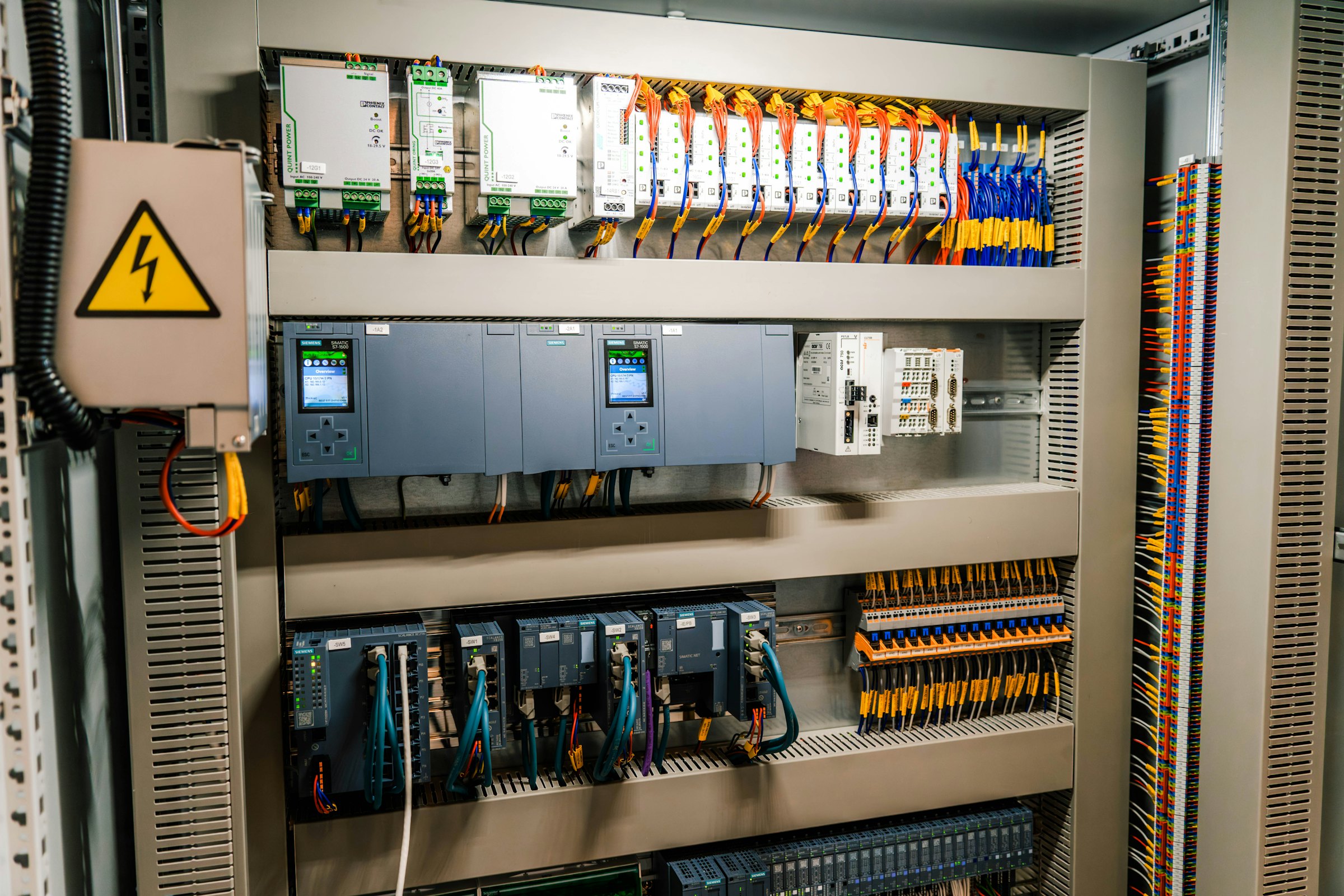
Simulators for machines, lines and sensors.
Write a connector for anything else in Rust or Python.
Restores
A fork needing a restore mode the connector lacks refuses to start and names the system.
| Mode | Meaning |
|---|---|
| Exact save | The connector saves and loads state exactly, as with a database dump. |
| Replay | The connector restarts from the same seed and repeats each step up to the restore point. |
| Approximate | Close to the saved state. Runs using an approximate restore carry a label in the run view, the run list and comparisons. |
| None | No restore. Forks needing a restore refuse to start and name the system. |